From Malawi to Ethiopia: Three lessons for making SOFF investments work
by Olga Miltcheva, Deputy Director SOFF Secretariat
A few weeks ago, I had the opportunity to visit, back-to-back, two beautiful, welcoming and… very different countries.
Malawi, a small, landlocked country of lush green hills and a tropical climate, yet highly exposed to floods and storms, has just entered the SOFF Investment Phase. The aim is to bring four surface stations into compliance with the Global Basic Observing Network (GBON) and to install — for the first time in two decades — an upper air station (radiosonde system). SOFF also supports the acquisition and deployment of supporting infrastructure and strengthening institutional and human capacity. Ethiopia, with its much larger territory, varied topography and exposure to recurring droughts, is preparing to install or rehabilitate 29 surface stations, five radiosonde systems and calibration facilities that will also serve the wider region.
Different scales. Different contexts. Yet three common elements stood out.
It starts with national leadership
In Malawi, the Department of Climate Change and Meteorological Services, under the leadership of Lucy Mtilatila, is advancing the project with a clear sense of national ownership. That commitment is reinforced at the political level by the Minister of Environment, whose broader vision links weather observations to climate resilience, agriculture and disaster preparedness.
In Ethiopia, the Ethiopian Meteorological Institute is pursuing an ambitious modernization agenda, working closely with a government focused on strengthening national infrastructure and early warning systems. In both countries, the message is clear: these are not external projects but national priorities.
Partnerships rooted in local reality
Turning plans into functioning observation systems requires more than funding. It requires operational partners who understand both the technical and institutional realities on the ground.
In both Malawi and Ethiopia, the United Nations Development Programme (UNDP), acting as SOFF Implementing Entity, is helping national meteorological services translate investment plans into concrete action. At the same time, the Norwegian Meteorological Institute, serving as Peer Advisor, in collaboration with their Iceland counterparts in Malawi, provides expert technical and peer-to-peer guidance to ensure that new observing systems meet agreed international standards while remaining adapted to national capacities. This collaboration ensures that observations and the resulting data are reliable, while contributing to sustainable investment in national meteorological infrastructure and capacity development.
What stands out is not only the expertise these partners bring, but their effort to understand the local context — an essential ingredient for building systems that can be sustained over time.
Coordination is not optional
In both countries, many partners are investing in weather and climate services — development banks, bilateral donors, UN agencies and technical organizations. This engagement is encouraging, but it also makes coordination and long-term thinking essential.
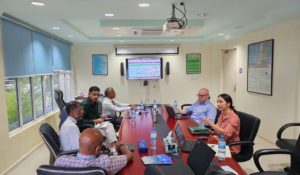
That is why in Malawi, I attended the CREWS Steering Committee, where discussions focused on linking the dots across the early warning value chain and ensuring that partners avoid duplication while reinforcing each other’s efforts. With the same purpose in Ethiopia, I connected with Red Cross teams working within the Weather at the Heart of Climate Action consortium, of which SOFF is also a part, to identify operational synergies on the ground.
These conversations made one thing clear: when multiple partners invest in different parts of the same system, coordination is a critical factor.
Taken together, the experiences of Malawi and Ethiopia reveal a broader lesson: weather and climate investments succeed when leadership, partnership and coordination turn projects into systems that endure.
YOU MAY ALSO LIKE...