Solomon Islands: From Clearing the Path to Training the Future of Weather Resilience
This stories were originally published by UNDP here and here.
In the Solomon Islands, climate change is no abstract threat — it is a daily reality, shaping lives, livelihoods, and the safety of communities across the archipelago. Strengthening weather services and climate resilience requires more than forecasts; it demands people, infrastructure, and systems that are prepared to meet the challenges ahead.
With support from the Systematic Observations Financing Facility (SOFF), the Advancing Meteorological Observation Systems for Resilient Development (AMOS-RD) project is strengthening the foundations of climate resilience nationwide. The project is implemented by the UN Development Programme (UNDP) in partnership with the Ministry of Environment, Climate Change, Disaster Management, and Meteorology (MECDM).
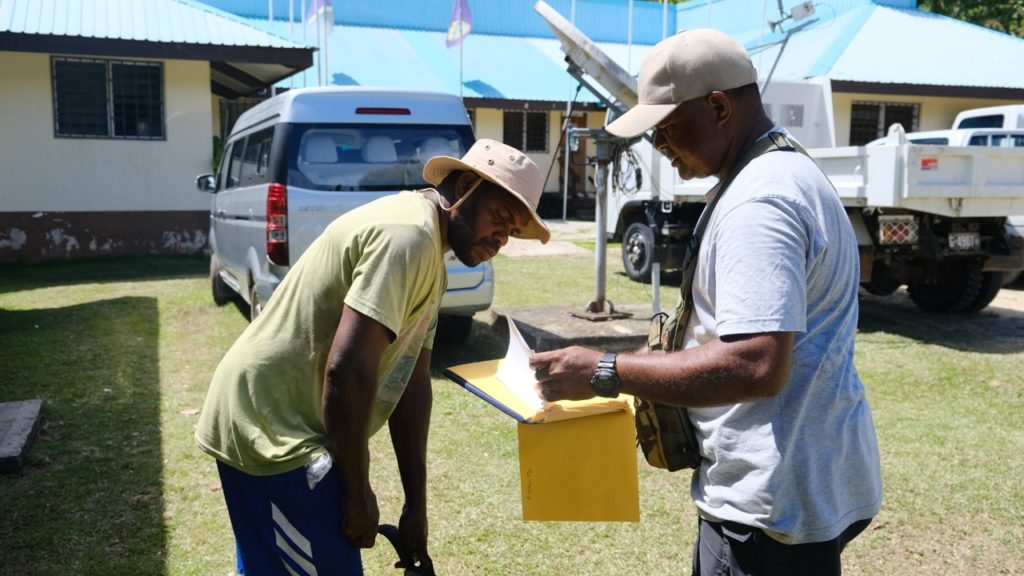
Before the first materials arrive or data flows into national and global forecasting systems, a quieter task determines whether progress can even begin: ensuring the ground is safe. Across the islands, remnants of World War II lie hidden in family-owned lands, gardens, coastal paths, and hillsides. For AMOS-RD, addressing unexploded ordnance (UXO) is not an optional step; it is the foundation upon which future meteorological infrastructure will stand. Teams from Clear Grounds, experts in explosive ordnance disposal, meticulously scan, clear, and secure each site. Their work combines technical skills with lived understanding, reflecting the realities of communities long accustomed to navigating these inherited hazards.
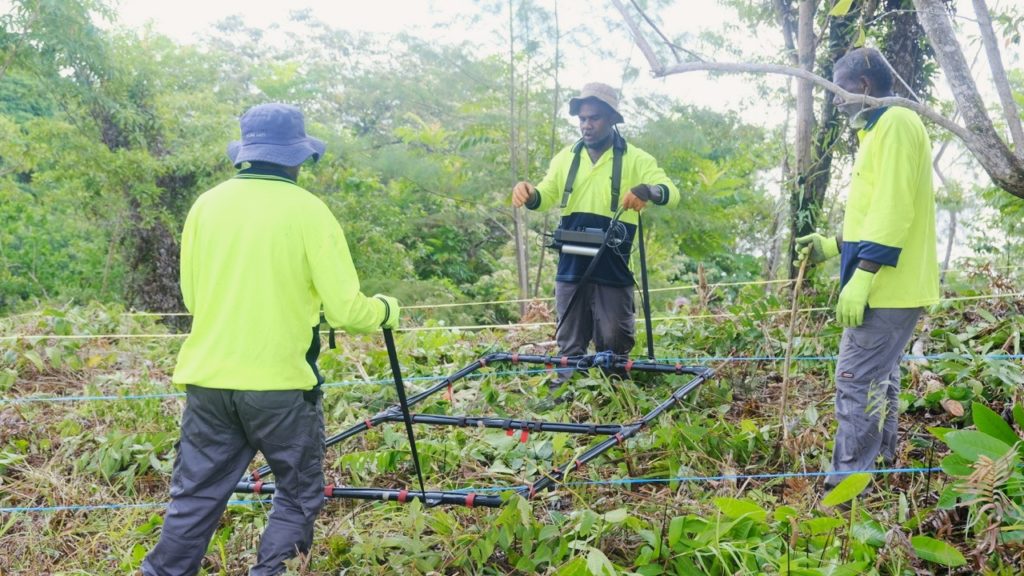
Patterson Filiga, a UXO specialist from the Russell Islands, recalls growing up with unexploded munitions embedded in the landscape. “We saw them everywhere. I had but one thought — they need to be cleared,” he says. His work, and that of the Clear Grounds team, ensures not only the safety of construction sites but also educates local communities on recognizing and avoiding hazards, strengthening resilience from the ground up.
With cleared sites, AMOS-RD is upgrading eight surface weather stations and constructing three new upper-air stations in Taro, Tulagi, and Lata, aligning with Global Basic Observing Network (GBON) standards. These upgrades will expand the capacity of the Solomon Islands Meteorological Service (SIMS) to launch weather balloons, collect atmospheric data, and provide accurate, timely, and locally relevant climate and weather information. As Markus Repnik, Director of SOFF, emphasizes, “Closing the basic weather and climate data gaps in the Pacific would not only reduce forecast uncertainty by up to 20 percent in the region but also improve forecast accuracy across the globe.”
People are at the heart of this transformation. Earlier this year, ten young Solomon Islanders completed a six-month Meteorological Observers Training Programme under SIMS, earning Class IV Meteorological Observers certification from the World Meteorological Organization (WMO). Most of the trainees are fresh out of Year 12, aged between 18 and 24, representing a new generation of climate professionals dedicated to public service. They will be deployed to provincial weather stations, supporting aviation safety, daily forecasts, early warnings, and climate monitoring — a role whose value resonates far beyond the islands.
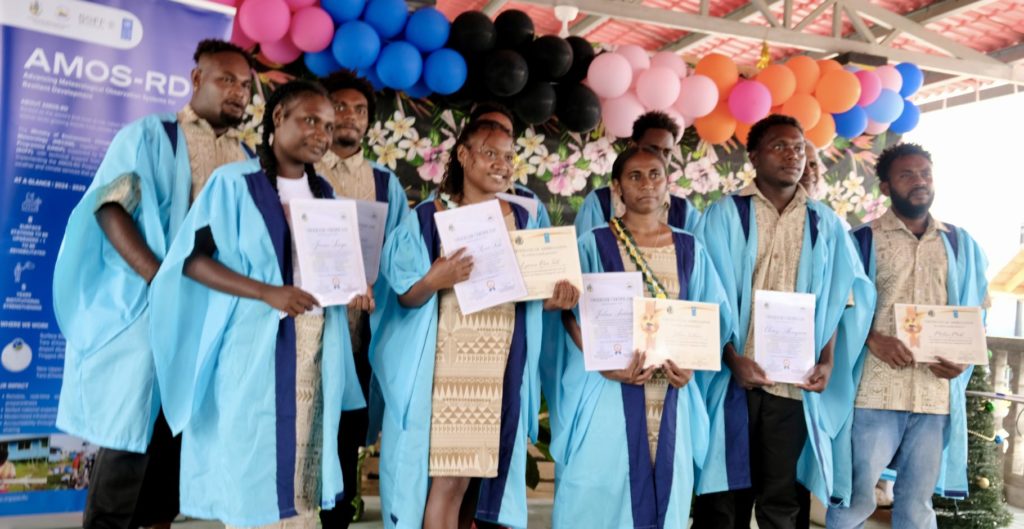
Lyvena, one of the graduates, reflects the motivation shared by her peers: “I want to apply what I’ve learned and do something that matters.” For SIMS, nurturing a pipeline of skilled and passionate observers has been a priority for decades, and this cohort exemplifies how local talent can be empowered to deliver national and global impact.
The AMOS-RD project’s approach — combining safety, infrastructure, and human capacity — illustrates a broader principle: climate resilience cannot be built in isolation. It requires understanding the lived realities of the land, respecting its history, engaging communities, and ensuring that development strengthens safety, resilience, and dignity. From clearing hidden wartime hazards to training the next generation of meteorological observers, each step contributes to systems that protect lives, support livelihoods, and generate data essential for the global forecasting community.
Through these integrated efforts, the Solomon Islands are strengthening both infrastructure and expertise to serve communities today and for generations to come. With SOFF support, the country is closing critical gaps in weather and climate observations while embedding resilience, knowledge, and safety at the core of its meteorological systems — delivering benefits that enhance forecasting and preparedness worldwide.
YOU MAY ALSO LIKE...